Six o'clock arrives. You close the laptop, drift into the kitchen, and twenty-five minutes later you're back at the desk — just checking one thing. It's the home-working version of leaving the office and then hovering by the door. There's no commute to mark the end, no lift doors closing, no walk to the station. So the working day thins out rather than stopping.
A ten-minute shutdown routine fixes most of that. Not because rituals are magic, but because a short, fixed sequence draws a clear line between working and not working — and gives tomorrow a running start.
Why a ritual works better than willpower
By six in the evening, your supply of good decisions is running low. Telling yourself you'll "just finish this bit" is exactly the moment you're least equipped to make that call. A routine sidesteps the negotiation: same steps, same order, roughly the same time. Nothing to decide.
Two things happen when you do it. Unfinished work gets written down somewhere outside your head, which is often enough to stop it circling while you're trying to eat dinner. And tomorrow starts with instructions rather than a blank screen.
The ten minutes, roughly
It helps to know where the time goes, because "shut down properly" can sound like a forty-minute tidy-up. It isn't. A workable split:
- 3 minutes — reset the desk itself: cups, papers, cables, surface.
- 3 minutes — write the handover note for tomorrow.
- 2 minutes — close the loops: quick replies, open tabs, stray notes.
- 2 minutes — shut the equipment down and leave the room.
Set a timer if you're the sort of person who turns a two-minute tab sweep into an hour of reading. Ten minutes is the point. If it regularly stretches to thirty, you're not shutting down, you're working.
Reset the desk, not just the screen
Start with the physical stuff, because it's the fastest win. Take the mug to the kitchen. Bin the receipts and the envelope you've been ignoring. Coil the charging cable or drop it in a drawer. Put the notebook somewhere you'll find it in the morning. Thirty seconds with a cloth and the surface is neutral again.
Anything that still needs your attention doesn't get buried. Have a single landing spot — one tray, one folder, one section of the desk — for paper that isn't finished with. Drawers are where tasks go to disappear.
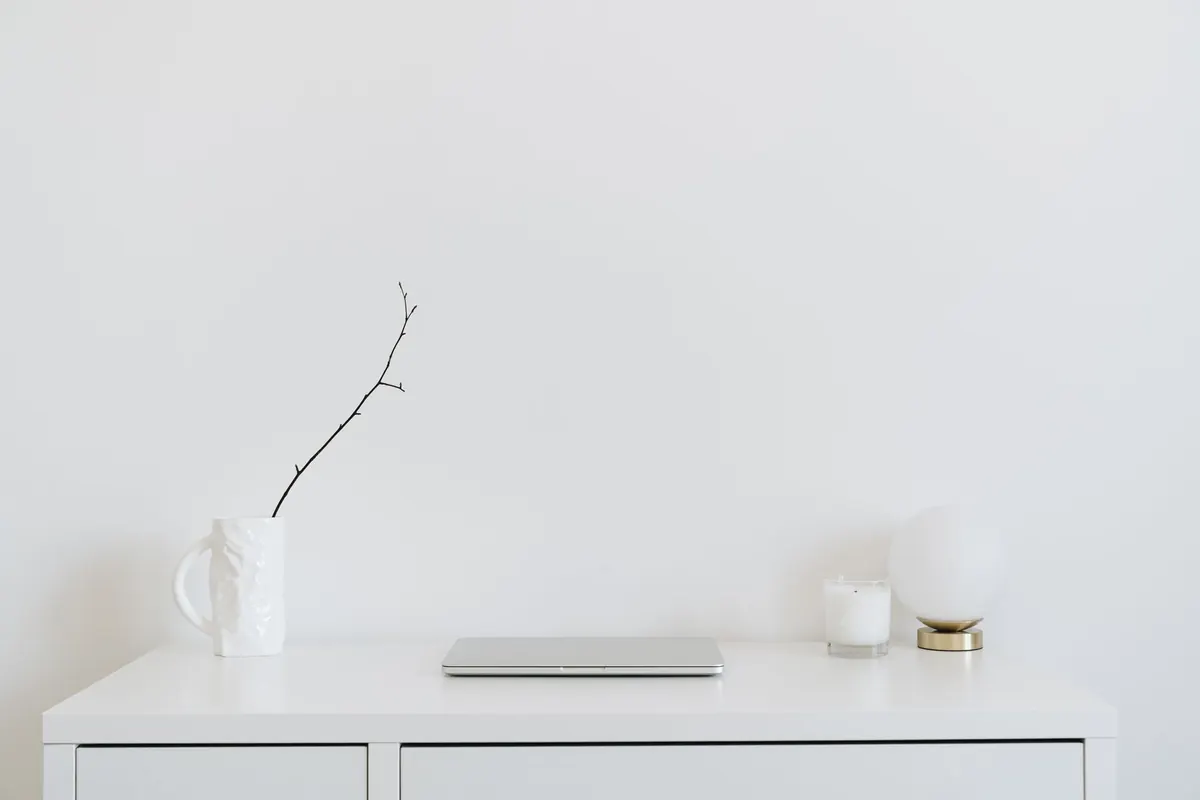
If your desk lives in a shared room, this step does something extra: it tells everyone in the house that the workday is over. A cleared surface is a clearer signal than saying so.
Write a handover note, as if you were leaving a shift
This is the part people skip, and it's the one that pays. Don't write a to-do list. Write the note you'd leave for whoever took over from you at the end of a shift. Three lines is plenty:
- Where I stopped and what I was about to do.
- The next physical action — not the goal.
- Anything I'm waiting on from someone else.
"Write report" is a bad note. It tells you nothing you don't already know, and tomorrow you'll spend ten minutes reopening files to work out what it meant.
Pricing section of the quarterly report: drafted the first two bullets. Next, add the three supplier figures from the email thread with Accounts, then write the closing paragraph. Waiting on Rob for the updated forecast.
That took forty seconds to type, and it removes the whole ritual of re-entry: the scrolling through yesterday's browser history, the half-remembered thought you had in the shower.
Close the open loops that keep you in work mode
Then deal with the loose ends quietly holding your attention. A message you can answer in one line? Answer it now. A two-minute job you keep rescheduling? Do it. Anything longer goes into the handover note or onto tomorrow's list — not started.
Tabs are the other offender. Close the ones you won't need. If a page is genuinely worth keeping, save it to a reading list — but nineteen open tabs isn't a plan, it's an ambient reminder that you haven't finished. Do the sweep, then leave it alone.
Shut the laptop down properly
Closing the lid is not shutting down. Thirty tabs will still be there in the morning, along with the half-written email you were composing, ready to drag you straight back into yesterday. Save your work, quit the applications, then shut down or sleep the machine. Turn off the monitor. Kill the desk lamp.
If you can, move the laptop off the desk — into a drawer, onto a shelf, anywhere that isn't within arm's reach of the sofa. The point is that picking it up again takes a deliberate decision rather than a reflex.
Then hold the line. The whole routine falls apart at nine in the evening when you think "I'll just check one thing". One check becomes twenty minutes, and the ten minutes you spent earlier stop meaning much. If you keep a work phone, give it hours too, and let it charge somewhere other than the bedroom.
Making it stick
Anchor the routine to something that already happens — the last coffee of the day, the end of your final meeting, the moment your working hours finish. A fixed trigger is easier to keep than a fixed time.
Keep the checklist where you'll see it: a card taped inside the desk cupboard, a note in your phone, three lines on a whiteboard. After a fortnight you won't need it, but the first two weeks are where the habit is won or lost.
If you miss a day, don't fix it by working late. Do the shutdown the next day instead. A routine you return to is worth more than one you execute perfectly for a week and then abandon.
The payoff is tomorrow morning
The real return on those ten minutes arrives before you've had breakfast. You sit down, read three lines you wrote yesterday, and start. No warm-up scroll, no archaeology through folders, no wondering what you were so worried about at six o'clock.
Better still, the evening belongs to you. The laptop is off, the desk is clear, and nothing is left hanging in the middle of a sentence. Ten minutes, once a day, is a small price for that.
Photo: alleksana / Pexels